

Transcript
Evan Dumas
You’re listening to Group Practice Tech, a podcast by Person Centered Tech, where we help mental health group practice owners ethically and effectively leverage tech to improve their practices. I’m your co-host, Evan Dumas.
Liath Dalton
And I’m Liath Dalton, and we are Person Centered Tech.
Liath Dalton
This episode is brought to you by Therapy Notes. Therapy Notes is a robust online practice management and electronic health record system to support you in growing your thriving practice. Therapy Notes is a complete practice management system with all the functionality you need to manage client records, meet with clients remotely, create rich documentation, schedule appointments and bill insurance all right at your fingertips. To get two free months of Therapy Notes as a new Therapy Notes user go to therapynotes.com and use promo code PCT.
Evan Dumas
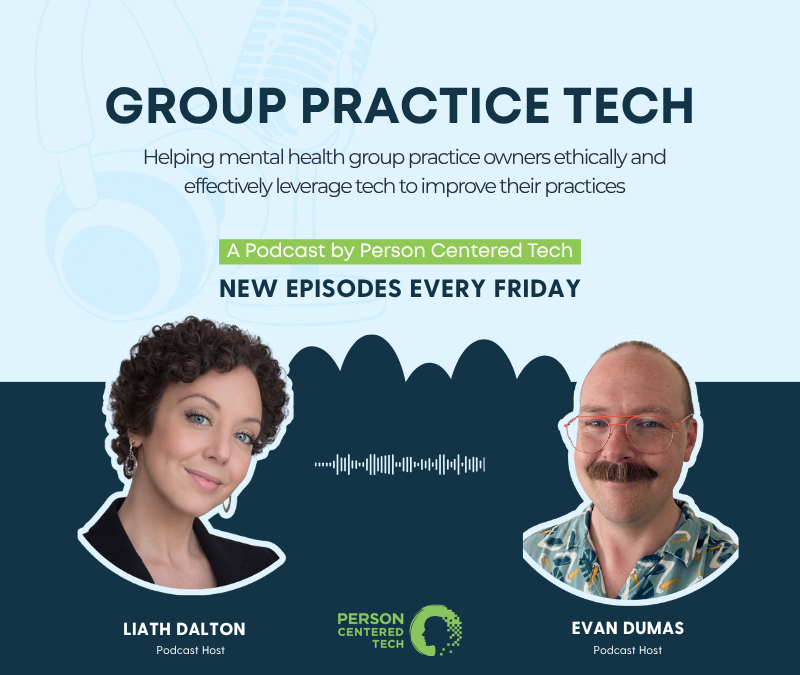
Hello and welcome to Episode 622: Must You Complete the Note Before Submitting the Claim? Fraud, Mistakes, and the Rules That Actually Apply, with guest Dr. Maelisa McCaffrey.
Liath Dalton
We are, but what brings us together today is something new, which is basically that over the last week and a half, going on two weeks now, at the time of recording, Maelisa and I have been hearing a lot from clinicians and practice leaders who have been understandably alarmed by an article titled “Wait, You MUST Write Your Session Notes Before Submitting Your Claim or Superbill.”
Liath Dalton
Basically, that article asserts that a session note needs to be completed and signed prior to an insurance claim being submitted or before a superbill is provided to a client, and it invokes the Federal False Claims Act and suggests that submitting a claim before the documentation exists may constitute fraudulent or abusive billing, even when the timing is simply the result of an oversight or documentation backlog, and kind of characterizes that issuing a superbill before completing a note as creating a fraudulent document as well.
Liath Dalton
Hello and welcome to Group Practice Tech. I am joined today by my friend and colleague Maelisa McCaffrey from QA Prep. Welcome, Maelisa.
Maelisa McCaffrey
Thank you. Good to be here again. We’re just making this a regular thing now.
Liath Dalton
So these are understandably frightening assertions. Because the Federal False Claims law can carry both civil and criminal consequences, so it makes total sense that clinicians and practice leaders have been really worried by this. What brings Maelisa and me to having this conversation today, though, is that the legal and compliance analysis here is quite a bit more nuanced than the article suggests at face value.
Liath Dalton
Of course, there are legitimate issues that practices need to address. Your documentation and billing workflows need to support accurate claims and medical necessity, timely completion of records, and of course compliance with applicable payer requirements.
Liath Dalton
But at the same time, whether something constitutes a false claim and whether it could create civil or criminal liability cannot be determined solely by comparing the time a claim was submitted with the time a note was signed. The broader context is that the applicable law payer and its requirements, specific facts, knowledge, and intent, intent being a really big one, materiality, contractual obligations, and even the distinction between a claim and a superbill are all relevant here.
Liath Dalton
So Maelisa and I are going to unpack all of that together, and have kind of a couple different buckets in which these considerations and clarifications fall. So now that I’ve given the lay of the land a little bit, Maelisa, what what do you want to chime in about?
Maelisa McCaffrey
Yeah, yeah, and it that was such a great summary of kind of overall what the article says, but then also, related, what are the big fears based on reading this article, right? And I think the biggest fear, which I’ve heard from people, you know, I want to reiterate that like nothing changed because this article came out. The laws have been the same before and after. Policies have been the same before and after. Practices have been the same before and after. And speaking to that, I have gotten questions about fraud and literally, will I be thrown in jail for writing my notes late for over a decade?
Liath Dalton
Right.
Maelisa McCaffrey
Like this, this has been a concern. So I want to just really iterate that none of this is anything new. Nothing has changed.
Liath Dalton
Right?
Maelisa McCaffrey
In a good way.
Liath Dalton
It’s just at the fore. It’s at the fore of a lot of people’s minds and considerations right now. Right?
Maelisa McCaffrey
Yes. Yeah.
Liath Dalton
The pot’s been stirred a little bit.
Maelisa McCaffrey
Very much so. And and and understandably, you know, people are, in my professional opinion, freaked out. Right? So people are very understandably freaked out by this. And I see a lot of these as again not new, but, kind of, nuanced issues that fall into this like either fraud versus mistake category or fraud versus policy category, which are different things. The superbill versus submitting a claim, which are two different things. They might be the same on the billing end, or from an insurance company perspective, they are not the same for you as a clinician, and –
Liath Dalton
Right, the obligations are very different between the two.
Maelisa McCaffrey
And then the other thing that I know people talk with me about a lot, and isn’t necessarily the big one that’s coming from this article. I think the fraud thing is is really the the biggest concern raised here, but I also, you know, in the article, Barbara also talks a lot about, kind of, when these situations, what is the practical application here, right, what happens? And therefore it she ends up talking about people changing or amending notes. And those are two different things.
Maelisa McCaffrey
Like changing a note is different from amending a note. And that’s something that frequently, I wouldn’t say people are coming to me with that question initially, they’re more coming to me with that fraud question. But when I am talking with people about how to catch up on notes, which is exactly what this article is like implying you need to do, which I do agree with. That comes up a lot. Like what’s wrong, you know, how do I manage these dates on this note? How do I change things? Can I change things? So that’s another big issue that I want to talk about. So kind of those three big things,
Liath Dalton
Perfect.
Maelisa McCaffrey
And we can we can start off with the fraud thing, which I think is the biggest concern for everyone.
Liath Dalton
Yes, I I think let’s not keep our listeners waiting on the edge of their seats till the the end. Let’s try and provide some immediate relief here.
Maelisa McCaffrey
Yes. So I will preface this by you know I am not an attorney. However, there is an attorney that if you are a member of Person Centered Tech, what is what is your membership called?
Liath Dalton
Practice Care Premium.
Maelisa McCaffrey
Yes, then you get to ask an attorney questions once a month, and I did that. So be, be a member. It’s it’s worth it for a multitude of reasons, but that is one, a really big one.
Maelisa McCaffrey
And so, no, I you know the article points to the False Claims Act, and the False Claims Act is specific to fraud. And it is not specific to mental health care or even health care. It’s specific to essentially frauding the the federal government, right? Billing the federal government, which when you are billing Medicare, that is what you are doing. And so, you know, in practical terms, it’s if the federal government is paying you for something, you can’t lie. It is a crime to lie to the federal government and say I did this thing and you should pay me when you haven’t done that thing. And so it is a crime to, to be fraudulent. And to be fraudulent is to knowingly intend to bill for something you know you did not do.
Liath Dalton
Exactly.
Maelisa McCaffrey
And so it’s pretty black and white that a fraud is different from a mistake.
Liath Dalton
Yes.
Maelisa McCaffrey
So you can mistakenly bill. People do that all the time. People do literally forget to change a billing code, for example, and accidentally bill 90837 which is typically paid at a higher rate than 90834. People genuinely make that mistake. That is not fraud. You are not defrauding the government or Medicare or anyone if you genuinely make a mistake. Now, do mistakes still come with consequences? Yes. If that mistake is found by you, and you, you know, correct that mistake, you are paying some money back.
Maelisa McCaffrey
If that mistake is found in an audit, you are still going to be paying that money back, right? It doesn’t mean you will be, that anyone will assume you committed fraud, even if that mistake were found in an audit. It doesn’t mean that, you know, you will be you you you are very unlikely, almost nearly impossibly going to be tried for something. But will you have to pay that money back for sure? That will happen, right?
Maelisa McCaffrey
So, so I do want to iterate that like mistakes have consequences, and audits can have consequences. And when audits find mistakes, there are consequences, and often negative consequences, to clinicians more than anyone else, right? And and it’s really really unfortunate and really sad to see those things happen. But that is not fraud.
Maelisa McCaffrey
And I have worked with even people on when they are being investigated by the board. I’ve worked with attorneys who hire me to read through the documentation, and even in those circumstances where clinicians, I’ve worked on both side of things, where I’m kind of in support of the clinician and say you know things were applied unfairly. I’ve also worked in the case where I said no, the clinician did a pretty poor job here, actually, this was very poor documentation. And in both circumstances, no one is saying those clinicians were being fraudulent for having late documentation, for doing documentation after the board investigation was initiated, for improperly billing Medicare. And that’s the term that’s used by Medicare: improper billing. They don’t say fraud; they say improper payments, improper billing.
Maelisa McCaffrey
So even in Medicare’s terms, you know they recognize that these are two very different things. Fraud does happen. I think this surprises a lot of people, and so I I also do like to talk about that. Fraud is real, and and people fraud Medicare very purposefully and to the tune of millions of dollars. That’s obviously not the average private practice clinician. It’s usually larger practices that do that. It’s, it’s usually fairly egregious.
Liath Dalton
And it’s very intentional, right?
Maelisa McCaffrey
Yes, very intentional.
Liath Dalton
What we’re essentially talking about here is billing for sessions that did not occur
Maelisa McCaffrey
Yes, that literally did not happen.
Liath Dalton
for clients or patients who are not the actual clients or patients of the provider or practice that is submitting those bills.
Maelisa McCaffrey
Yes.
Liath Dalton
That’s typically where the False Claims Act gets applied in the healthcare field, right?
Maelisa McCaffrey
Yes, and it’s very rare that the type of person who wants to purposefully bill for something that did not happen, that they did not do, that they only do it one time right? They typically do it, as a trend, multiple times, and that’s how then this is found out. And this is why audits happen. They happen for a reason. And and these things unfortunately do happen. So fraud does occur. If you’re listening to this, it’s probably not you. Right?
Liath Dalton
Right. Yes, exactly. Well, and this distinction between what constitutes fraud under the False Claims Act, under the Federal False Claims Act, versus a documentation mistake or completion mistake that coincides with a claim submission or provision of a superbill are two very distinct things.
Liath Dalton
And in last week’s direct support and consultation session with Eric Strom, who is the HIPAA and mental health law attorney as well as practicing clinician that we have the pleasure of collaborating with, Eric was really explicit that the sort of primary determinative factor as to whether or not something is under the purview, or like meets the the definition of a false claim under the Federal False Claims Act is the intent. That whether or not something is a false claim is predicated on intent. So, without presence of intention to defraud, to get paid for something that you did not do or did not provide, what we are talking about then is a mistake. Maybe it’s outside the scope of what the guidelines or requirements or contractual
Maelisa McCaffrey
Or contract.
Liath Dalton
obligations to the to the payer are. But if it is not done with the intent to get paid for something that you did not do and provide, it is not fraud. You have not committed fraud. You are not defrauding the the payer or the government.
Maelisa McCaffrey
Right. Yeah. And and that does specifically apply to the federal government too, right?
Liath Dalton
Yes.
Maelisa McCaffrey
This is not the same as a contract you might have if you are contracted with insurance.
Liath Dalton
Mhm.
Maelisa McCaffrey
And I think the next natural question then is: people are like, “Okay, thank God I’m not committing fraud, right? So breathe a little sigh of relief.
Liath Dalton
Yes.
Maelisa McCaffrey
You know, take that moment for yourself. But then the next very real question that I work with hundreds and hundreds of therapists on is, “Okay, but, if I do, you also said, Maelisa, if I make a mistake, there are still consequences, and and that is very real. And so, what what do I do about this mistake? When is it an error? When is it a big deal? When do I have to write my note? When is a note due?”
Liath Dalton
Right.
Maelisa McCaffrey
Yes. So, what is, that? So, there’s no law anywhere that I am aware of. I suppose at some point some state could make a law. Highly unlikely. There is no law that says when a note is due. It does not exist. I have done very extensive research, more in the last two weeks, over. Even court cases, people have sent me to try and say, “Well, no, it could be extrapolated to be fraud because of this, or because somebody submitted the bill. Like, do I have to still sign the note before I submit a claim? Because maybe it’s not fraud, but maybe that’s part of the policy, or is that a rule? And people will just throw out rules all the time. Like, well, Medicare says this. Well, show me. Where does it say that, right? Always ask.
Maelisa McCaffrey
And I’ve I’ve heard this from Eric. Where? What is your source for that? What is your source for that? Nine times out of 10, it’s going to be some random supervisor that a colleague had. That is not good enough. We are going to ask what is the source. So, what is the source where they got that information, right?
Maelisa McCaffrey
So, I have spent the last week digging into all the sources.
Liath Dalton
Yes.
Maelisa McCaffrey
And even Medicare does not say when a note is due. Do you know when it says a note is due? As soon as practicable. That is when Medicare says a note is due. As soon as practicable. Now, thank God, because we can do a lot of interpretation of that, right?
Maelisa McCaffrey
Now, I will tell you as a QA person, as a quality assurance person, as a former auditor, right, as someone whose job has been to train people on this stuff for, what I don’t know, since 2011 is when I started doing this stuff, I can tell you, doing your note in the first day or two will make a better note, will make a faster to write note, will help with your self care, will help with reducing all the things. Doing your note in the first, like literally within the first 24 to 48 hours, is not a requirement. I would recommend it. I 100% recommend it. It makes a better note. It makes you a better clinician. Not because, not even because you’re getting your notes done, but because it’s out of your head and you can move on with your life, and it’s not taken over you. And so I have seen that.
Maelisa McCaffrey
There is one, so Medicare is kind of divided up into these regions, and there are different private organizations that manage all the components of Medicare audits and billing and all these things,
Liath Dalton
Your MAC.
Maelisa McCaffrey
So yes, and so they’re called like the regional MAC, MAC, a MAC. And so this does change because these are contracts that are awarded. So you’ll want to just do a Google search to find out where your MAC is, because it can change. But there is only one MAC out of the whole country that even identifies a recommended time frame, and it specifically says, I’ll read you the quote.
Liath Dalton
Yes. Verbatim.
Maelisa McCaffrey
And this is WPSGHA. I cannot remember what that all stands for, but it covers a lot of states in the Midwest, quite a few states in the Midwest currently. And it says “COS does not provide any specific time for as soon as practicable.” It literally says that in quotes. “WPS medical directors offer a reasonable time frame of 24 to 48 hours.” So that, they don’t even say you are required.
Maelisa McCaffrey
They are saying they think 24 to 48 hours is a reasonable time frame. And keep in mind that, like with a lot of things, when it comes to insurance and mental health, we are not the main component of this healthcare. And so, if a nurse or a surgeon or a physician doesn’t do documentation within 48 hours, that can have life and death consequences. Like there’s a reason for a lot of these things, and it really is because a lot of medical care does require that level of precision and efficiency, right?
Liath Dalton
Absolutely.
Maelisa McCaffrey
And accuracy. And so that’s, and we are unfortunately kind of stuck in there, right? If you are seeing someone in an outpatient setting on a weekly basis, it is probably, probably, less critical for you to get your note done in 24 to 48 hours. It could be though, right? And so, I’m not like disputing, and I just told you, you will have a better note, and you will be a better person for having your note done, right? Just because you will feel better about it.
Liath Dalton
Yes.
Maelisa McCaffrey
And so, but I want to put that in context of why, what can feel like very stringent requirements are in place, and it’s because we’re just kind of part of this catch-all where that really is very critical. If your kid has surgery, you want note, you want notes from those medical providers in within 24 to 48 hours. Because they can be very important. So you know. So let’s keep that in mind, and not like make Medicare totally evil because they they want us to do notes in a day or two. Because I know that it can get easy to fall into that mindset.
Liath Dalton
Mhm.
Maelisa McCaffrey
But I want to bust this myth that there’s some law somewhere. It doesn’t exist.
Liath Dalton
Even for Medicare, which Medicare is the most stringent, right? We typically think of Medicare as not necessarily just setting what can be a precedent for the rest of the industry for other payers, but that of payers, the Medicare requirements tend to be the most stringent and black and white, right?
Maelisa McCaffrey
Yes.
Liath Dalton
Like if something’s going to be black and white, it’s going to originate with with Medicare. So the fact that there is an absence here of a hard and fast black and white requirement and contractual obligation, if you are a Medicare enrolled provider, is relevant. And so, I think what we’re wanting to really do is tease apart or parse out the differences between the the rationale or what should be the compelling reason for how you are completing your documentation and within what timeframes.
Maelisa McCaffrey
Yes. And and I will say, I think the next natural thing is, I have gotten literal articles and in case law, case law, audit results, all of these things have been submitted to me in the last week, right? As further both fear and justification for, but we can kind of assume this is a rule, right? Some arbitrary rule that we need to apply. And yet when I look into those, 100% of the time, whether it’s an audit, whether it’s like a case where someone literally was being tried for fraud, or or where the False Claims Act was mentioned, or whether it’s just an insurance audit that has nothing to do with fraud, right? All of these circumstances, if someone completing their note late is
Liath Dalton
Mhm.
Maelisa McCaffrey
mentioned, and we can just kind of again, there is no definition for that. So I can define it here as maybe you submit your billing before you finish your note, all right?
Liath Dalton
Mhm.
Maelisa McCaffrey
Which would be a very loose term. That is, there is no definition of that. I’m making this up right now, right? So, if I use that, using that definition, if that is ever mentioned in any of these circumstances, it is one of a multitude of reasons for someone having negative consequences. And then on the audit side is often listed, but not listed as a reason for recoupment.
Liath Dalton
Mhm.
Maelisa McCaffrey
It is simply listed as a finding. So when you do an audit, you find all kinds of things. Because guess what? It’s really easy to find things.
Liath Dalton
Yes.
Maelisa McCaffrey
Typically in an audit, you don’t have to have a perfect score. Having someone, having an auditor find something, doesn’t mean something’s wrong. What they’re looking for are either a large number of findings, which then over, like add up over time, to kind of give you like a a grade of a C instead of an A, right? Or they go to things that would be more extreme. So there are certain things that are considered more extreme and might have more weight in an audit than others.
Liath Dalton
Exactly.
Maelisa McCaffrey
But late notes is never one that I have seen be the reason for recoupment, for clawbacks, for fraud, for a board investigation, for board sanctions, never. It is never the main or sole reason. It is always just kind of captured up with all these other things that are the much bigger issues, and always the reason for the negative consequences.
Liath Dalton
That is such an important finding, and and clarification, and like contextual situating for for this whole consideration. And I I know the answer, but I want everyone to hear this as well. When it is listed in the findings for an audit, is that paired with any reference to the False Claims Act?
Maelisa McCaffrey
No, not that I have ever seen. No.
Liath Dalton
Right. So just mentioning that because even where it has been a finding from from all of the audit results that you have reviewed and been privy to, the incomplete documentation or late quote unquote late documentation finding has not been correlated to constituting a false claim?
Maelisa McCaffrey
Right. Exactly, and it’s even the findings, the the phrase that they’ll use if it’s Medicare is improper billing, right? So if you were like overpaid for things, or even if they say your documentation was really poor, that’s the the phrasing they’ll use is that you were overpaid because your documentation didn’t support what you were –
Liath Dalton
Medical necessity.
Maelisa McCaffrey
Yeah, it didn’t support medical necessity. It didn’t support what they paid you to do, in their estimation. But they’re not saying that you were fraudulent for having poor documentation, even.
Liath Dalton
Right. Which is, which is massive.
Maelisa McCaffrey
Yeah.
Liath Dalton
Okay. So, do we want to talk, I think we’ve hopefully addressed the fraud component of this and deprived the flames of fear that that had generated of of sufficient oxygen for it to continue.
Liath Dalton
So now, do we want to talk through more some of what those mistakes look like, or get into the claim versus superbill and like particular requirements in so far as you’ve been able to find any mention of them, yeah, from payers.
Maelisa McCaffrey
Yeah, I think the mistakes. I think we’ve kind of hopefully also explained that. If you want to dig into what are, there are a lot of common mistakes that people make. There’s a whole training on how to audit. I forget what is it called. What what is that training called? But I have, that I did with Person Centered Tech earlier this year, right?
Liath Dalton
Oh, that that was the think like an auditor.
Maelisa McCaffrey
How auditors think.
Liath Dalton
Yes.
Maelisa McCaffrey
Yes. So in that one, I explicitly go through how to review your own files, which is a key component of, if you work with insurance, you you should be, kind of, trying to think like an auditor and reviewing your files in that way as regularly as possible. It doesn’t have to take a bunch of time, but I walk through that and give you a tool for that. And also talk about what are often the red flags that insurance is looking for, which is often different from what most clinicians assume are the red flags that insurance is looking for and might lead to an audit.
Maelisa McCaffrey
Perfect. So, so I would –
Maelisa McCaffrey
Check out the show notes where I will link to the course brochure for that specific training. Okay.
Maelisa McCaffrey
Perfect.
Liath Dalton
Carry on.
Maelisa McCaffrey
Yeah. So, so yeah, if you want to dig into all the mistakes you might be making, I would recommend that.
Maelisa McCaffrey
And then, then so talking about claim versus superbill. So, if you submit a claim, that means you’re contracted with the insurance company, or we’ll we’ll use that language, right? So, if you are contracted with an insurance company, you’re submitting an insurance claim. You, you have a contract with the insurance company. Your client has a contract with the insurance company, and we’ll just use that phrase, and then together, that’s how you’re matched and agree. And the insurance says we’ll pay for you to do this service for this person because you are both under our umbrella.
Maelisa McCaffrey
That’s different than if you submit a superbill, which means that the client has this insurance, the client has this contract with this insurance company. You do not. You are this other entity over here on the side. Like a massage therapist, right?
Liath Dalton
Right.
Maelisa McCaffrey
There, like, there’s no difference as far as the insurance company is concerned. You might as well be the person’s vet, you know, like their dog’s vet, right? You’re a healthcare clinician who is not a part of their network. And so you submit because they have a service that is covered, by a degree that you have, psychotherapy, and you submit on their behalf, or you submit a receipt, basically, of what this person has paid privately. So you do not have a contract at all with this insurance company. It’s the client and the insurance company.
Maelisa McCaffrey
In this circumstance, so if you submit a superbill, you absolutely could be audited. It’s the client’s record. It’s the client the insurance company is potentially paying. Sometimes people submit this just to like help with their deductible, so the insurance company may or may not be paying. But regardless, they’re submitting evidence to the insurance that I’m paying for this healthcare service that you are not paying for. They can choose to audit that anytime they want because of their agreement with the client. There are no like financial repercussions to you, regardless of what happens there, based on the insurance company, because you have no agreement with the insurance company. That’s the whole point of being out of network: is that you don’t want to have to deal with insurance, and you shouldn’t have to deal with insurance, right? And so, if you’re out of network, you don’t have to worry about that.
Maelisa McCaffrey
Now, what a key part of this is, though, that is often missed is if you are giving people superbills, as soon as someone asks for a superbill, I would even argue at intake you should still review this. But as soon as someone asks for a receipt or a superbill or mentions they want to try and submit for their insurance to pay, you need to, this is part of informed consent now, you need to explain to them what it means when insurance pays for therapy. Which means you have to give them a mental health diagnosis, and that there those records can be audited. Those are really the big the two big things to cover, that you know. And if you are out of network, I recommend having in your paperwork that you cannot guarantee your documentation will meet the medical necessity requirements of their insurance company. Because you can’t, and you’re not contractually obligated to, and there’s no reason you should be worried about that because you’re out of network.
Liath Dalton
Right.
Maelisa McCaffrey
And so, if you’re like, if that insurance company says notes for some reason, let’s let’s make this up, I have not seen this, but let’s make up that that insurance company decides to have a rule, that they only pay for sessions when notes are due within 48 hours, if yours aren’t, I mean, you you never made that guarantee. But I do think it’s your obligation to review that with people as part of informed consent.
Liath Dalton
Right. To review with clients what the applicability is and and what may or may not meet the applicability requirements. And I want to take this a step further to help concretize it a bit. Because this is something that we’ve talked a lot about in sort of a different area of application with regards to superbills and something related to cross-jurisdictional teletherapy that is for which a superbill is provided. Because payers will often have a requirement related to provider location, not just client location, right? So this isn’t a question of permission to practice, legal authorization to practice, in the jurisdictions where care is occurring. But that some payers will only pay for telehealth if the provider is within the geographic region that the plan covers, or the state where the client is located, right? So that’s kind of the the premise for this this next part.
Liath Dalton
So then the question comes: Well, if I’m providing a superbill to the client to get reimbursed for that, what obligation do I have? Do I need to check and see if that’s applicable or not, what the payer’s location requirements for the provider are for for coverage? And this is something that Eric and I have talked with folks about a lot because this question, understandably, has come up a lot. And the guidance there is you are not bound to, nor do we recommend that you take on contacting the payer to identify what their requirements are and whether or not you meet them. So that’s the first part of it. And then the second part of it, as it relates to the teletherapy piece, is that we say you still just need to have accuracy and transparency in what is on the superbill. So the superbill should disclose what your location as the provider was for where care was delivered from. Not to be trying to meet the requirements, but basically, if it gets denied because it’s not within the conditions for which they provide coverage, that should be clear, right? But that isn’t something that entails you finding out and then adjusting things accordingly. So, I just thought that was really relevant because it definitely is analogous here, right?
Maelisa McCaffrey
Oh yeah. And and it also speaks to the fact that like it can actually be harmful sometimes when we try to do too much because you do want to be on top of these things if you are in network, and it it is a hassle, and I recognize that 100%. And if you are out of network, you don’t want to give your clients misinformation. And this stuff changes. All of these requirements change over time, and how many people like hear about laws that have passed well after the fact, right? So you can imagine insurance company policies, like, how often could those change? You have no idea. And so you don’t want to be the one responsible for that.
Maelisa McCaffrey
I also want to acknowledge, in a related way, that even though I’m telling you you don’t have, you know, we’re both saying, like you don’t have a contractual obligation to be on top of this, or to, for example, do your note within 48 hours of giving someone a superbill, and and there’s no law related to that. If you do have, if your records are audited and the insurance company says nope, those records don’t meet our medical necessity criteria whatsoever, can that still impact the therapeutic relationship? Of course, it absolutely can. Right? If your insurance, if their insurance says they’re not going to pay for therapy anymore, and now the client is mad at you, or even just literally can’t afford their therapy anymore. Right? Like the, I, I do recognize that there can still be consequences, and that is, again, why it is so so important to have these conversations, and to think of them as informed consent, not necessarily as like what law do I have to follow, and what rule do I have to follow, or what does this insurance company want or not want? It’s really about informed consent and making sure people are aware of those things.
Liath Dalton
Absolutely. So now segueing, because I think that like ties that piece of things up with a kind of neat and pretty bow, right? That’s, we have, we have our our takeaways and how to apply that in practice, and now the the big consideration around changing or amending notes and what that looks like. Because I think that’s one area where there’s a lot of confusion. I know you see this a lot more than I do, even, but it’s something I’m certainly privy to. Because of course there are HIPAA reasons for why notes and clinical documentation should not be changed, and it should, if additional information is necessary, or to make a correction if there was an error in something, that is something that should be done as an amendment versus editing and changing the original. But I’m probably getting ahead of myself, and I’m going to be quiet and let you explain it for us.
Maelisa McCaffrey
And I do think this is one of the rare circumstances where I do think Electronic Health Records have made this feel a lot more complicated than they used to be. So anytime. when I, it’s not as big a deal now, but when I used to do a lot of training with people who were new to electronic records and they were wondering how to do something, and I would often say, “Think about how you used to do it on paper, and usually that gives you the answer about how to do it.” You can’t do that with electronic signing because it’s a totally different thing, right?
Liath Dalton
Mhm.
Maelisa McCaffrey
So, in some ways, we could kind of also say so, if we think about how did you used to do an amendment, right? And so, I’ll backtrack a little bit. The reason I’m bringing this up as part of this article is that the article does go into the real life scenario that a lot of people have. Which is that maybe your EHR only lets you submit billing if the note is completed.
Liath Dalton
Mhm.
Maelisa McCaffrey
Which I don’t particularly like, because I see this create issues, just like Barbara mentions in this article. So then sometimes people will like just check off the note is done or sign the note with nothing in it, or with very little in it, just so they can submit the billing. Or sometimes people do that because they think, well, then it will look like I did the note, and then they unsign it or unlock it, or whatever your EHR calls it, and change the note or add the information later. Right? Like actually add the information.
Maelisa McCaffrey
So this is a real practical thing that happens, and why does it happen? It literally happens because electronic signatures mean the note is done. That is kind of a new thing, right? That, that’s new. But if we think about, but I don’t want people to hear that example and then think, “Oh my gosh, I can never change a note.”
Liath Dalton
Mhm.
Maelisa McCaffrey
You can amend notes when there is reason to do so. I have done it myself. There are times, I would be shocked if anyone has never had to do that and has been in this profession more than a couple years. Like there are just times you forget to include something, or you make a mistake that you need to fix, right. And this happens, but there’s a proper way to do it, and it’s through what’s called an amendment. So you don’t go in and just like delete a signature and change it. And in fact, if your EHR is HIPAA secure, you can’t do that. That’s part of it being HIPAA secure is that it tracks any changes to signatures, any changes to the note itself, and there should be a log of things being signed, unsigned, locked, unlocked, again, whatever language your EHR uses, right? So, so that that can always be produced, ideally to support you in whatever would be necessary, but sure, that that could potentially be used against you as well, right?
Liath Dalton
Right.
Maelisa McCaffrey
So –
Liath Dalton
Let me interject there on on the HIPAA side of things because one of the things that we’re always looking for when evaluating EHRs is that once a note is signed and locked, that it cannot be unlocked. That the only way to add additional information or make corrections if something in the original signed and locked note needs to be corrected is through an amendment. That it is HIPAA problematic if you can unlock or unsign a note once it has been signed or locked and or logged. And part of the reason for that being is that we, the HIPAA mandate is to protect the confidentiality availability and integrity of information, of client information. And that’s where the integrity component comes in, right?
Liath Dalton
So I’ll let you talk about the the paper analogy, but basically, if you write a session note and then you’re like, “Oh, I forgot something or something was incorrect, you do not destroy and start over and rewrite everything, right? You take another piece of paper, you write the date that you were making this addition or correction, you state what the purpose of it is, like correcting or adding additional information and why that’s relevant or necessary, and then provide the additional information and you slide it in with with the original note.
Maelisa McCaffrey
Yes, yes. And ideally, your EHR would literally make it look the same. Unfortunately, some of them do not do that, and it really bothers me because it-it’s you literally are going in and changing it like you would with a Word document. Now that is, those changes are tracked, right?
Liath Dalton
Right.
Maelisa McCaffrey
And so that that component keeps it, you know, technically HIPAA secure or whatever, but but it makes it confusing and it makes the messaging confusing as well.
Liath Dalton
Yes.
Maelisa McCaffrey
Because it’s much easier to just have an additional document, that’s a you know, and literally you say like amendment two note, and like you said, and then you would just write whatever information, write why you needed to add it. Which could be that you forgot. I’ve done that, right? Like information was missing, or you know, note was incomplete, right? And you add more information. And writing an amendment is in no way a red flag. It never makes you look bad. It usually makes you look good and conscientious as a clinician because it it shows that you went in and like actually reviewed things.
Maelisa McCaffrey
When we used to prepare for audits, when I worked at a big, very large agency and we had lots of Medicare billing, Medicaid billing, we would still sometimes write amendments. Like if we found some things were really bad, like, like some of these progress notes are terrible. How are we gonna, you know, try and and mitigate this? We would have the clinicians write amendments sometimes. And so we were doing it after the fact, but we weren’t changing anything, right? We weren’t changing the previous notes. We were just showing, like, look, we went through this, again, being very transparent. We went through this. We recognize there was missing information. We are trying to include that information before we submit this to you.
Maelisa McCaffrey
And I guarantee you that is what most, that is how most auditors are viewing it. They really are viewing it as like, they want the right information. They want information, and it is not a bad thing for you to provide it. But you know, you don’t want to get into this very like wonky thing of like saving notes and then rewriting them and changing things after the fact, or saving things just to submit billing.
Maelisa McCaffrey
I will say a lot of that, and if you find yourself getting stuck in a lot of that, from a practical standpoint, I have started recommending paper to a lot of people. Because if if you’re the type of clinician who overthinks things, and you tend to go back and reread your notes, and then wonder, should I have changed this word here or done this differently? Do it on paper. There is something about doing it on paper that feels less compelling to change.
Liath Dalton
Right?
Maelisa McCaffrey
And it’s it’s purely psychological, right? Because you’re the same person. But I have seen this over and again. People write less when they write on paper, and feel better about it, and they feel less compelled to freak out over the dates of things and when things were written and how much to include, and less compelled to go and change it after the fact.
Liath Dalton
Absolutely.
Maelisa McCaffrey
So if that is you, it’s a strategy to try.
Liath Dalton
Right, it’s one of the areas where I feel like it, we have an easier time doing what is good enough versus striving for perfection and getting into a perfectionism spiral. Which then, thinking of this makes me smile because our beloved late founder Roy would always paraphrase, I think it was Voltaire, right, who, “don’t let perfect be the enemy of good,” and that is so applicable to just about everything in practice, right? Like,
Maelisa McCaffrey
100%.
Liath Dalton
especially with documentation.
Maelisa McCaffrey
Yes, so you know if you know you’re one of the overthinkers, it’s, and I will even say frankly, as an auditor, if I see a paper form that has like two lines on it, let’s say, and you as a clinician wrote in and filled in that information, there is something about it that feels complete, even though we all know that if you typed out the same information, you would have typed up three times as much because it would fit in that same amount of room. But there is there is something to it. It it feels more complete. And I think, yeah, you’re just less likely to get stuck in that. But yeah, don’t. And I, there is some, I do understand the difficulty when your EHR is kind of having, has certain parameters, and then you know your note is literally tied to your claims, and that can get very confusing and difficult. But if you’re doing the thing where you just sign off on the note and say it was done. Please do just do your note on paper and say “see paper note” in that electronic version.
Liath Dalton
Yeah.
Maelisa McCaffrey
That’s that’s what I recommend.
Liath Dalton
Right. So because I just want to be super duper explicit here. What you’re saying is, don’t put in a quote unquote placeholder note so that you can submit your billing and then go put the actual note in either as an amendment, or if you are using an EHR that allows you to edit something, actually edit the original once you’ve signed and locked something to go back in and put the actual session note in there.
Maelisa McCaffrey
Right, and I will say my personal experience now, I specifically run groups for therapists who are behind in their notes, so my experience here could be different because I have a different type of audience or person that I’m working with, right? My experience that is not what most clinicians I work with are doing. What most clinicians I’m working with are actually doing is just not leaving, just not completing the note. And my experience is that people are far more likely to have, for example, 700 notes that are all not locked or not signed or like incomplete, and then they go back because now they’re, they’ve moved beyond the paralysis. They’re ready to go back and face some of these notes, and they find half of them were ready to go, and they just never signed them because they of that anxiety around what feels so complete when it’s signed.
Liath Dalton
Mhm.
Maelisa McCaffrey
And so I say that because I I feel like specifically in this article we’re talking about that experience was not reflected, and that is by far who I work with more. And so I want to recognize you, and also, you know, speak to, if that, if you recognize yourself in that statement, just sign the note. Just get it done. You can write an amendment later if something important, if you notice something important is missing. You can always write an amendment. That is not, when you read some of these policies and things, and they talk about changing notes, that is not what they’re referencing. They are referencing literally changing details later. Writing an amendment including relevant, necessary, important information after the fact is always okay.
Liath Dalton
Yes.
Maelisa McCaffrey
Always okay. So just sign, complete and sign your note. And know that you can always go back and add more information later if you need to. 99% of the time, you are not going to do that because you are not going to need it, right? But then you don’t have all these like notes that look incomplete that really are done, right? I see that so often. So just sign the note. Just get it done.
Liath Dalton
Yeah, that hopefully feels like, empowering and motivating and reassuring as well. I think you hit the nail on the head with the like the finality of signing it. Like, oh, then I have to ensure that it contains everything that it should and that it is kind of like the perfect note right? And that it’s going to be sufficient and withstand whatever scrutiny and oh my gosh what if it doesn’t, so I’m going to sort of keep it there in in limbo and not commit. And that is not not what is needed. Or
Maelisa McCaffrey
No. Yeah, and because the reality is, you’re so much less likely to go back and and finish that note, but it’s still hanging over you. Now this number gets larger. Now you’re less likely to do today’s note because you’re already overwhelmed by notes, like it just becomes this perpetuating cycle. Yeah, just just sign them and be okay with mediocre notes. Because I will. Maybe we can kind of like wrap it up with, one thing that I did highlight in that training, that audit training that I did for PCT, which was that what is the biggest finding? And this is again nothing new. I have found nothing new in all this research I’ve been doing. The biggest finding in audits across the board is just that documentation didn’t exist. That the notes weren’t done, that the treatment plan wasn’t there. Those are the two biggest things. So just get them done. Just do it.
Liath Dalton
Yes, to to pull for a marketing slogan, right?
Maelisa McCaffrey
Yeah, yeah.
Liath Dalton
Do it. Just do the do the documentation. I actually and agree. We should wrap, wrap up and and conclude this if we still have folks with us. But there were, your like just do it on paper and just do the note takeaways I thought were super valuable, and there was a third one that we were talking about earlier as as well. So what, what is that one, Maelisa?
Maelisa McCaffrey
You have to remind me what it was that I said.
Liath Dalton
Oh, that that it can sometimes be the case that it is more appropriate for someone to be in, to not have solo practice.
Maelisa McCaffrey
Yes, and yes, thank you for that. I think another thing here is that if these components are very stressful for you, very difficult to do, I do think like, get my book right? Like take a couple of these trainings, see if that type of information, if some templates, some strategies for writing notes or treatment plans more quickly, help you, right? Get consultation. Join, join the PCT membership, right? Like there are all these things that really do, and and that is the purpose of them, is to make private practice easier, right? I think specifically for us, like that is that is a lot of why we do this because we know you’re this island that is out there. You’re not even an island. You’re like in this little canoe by yourself, floating around, right? And it feels, it’s very isolating, and there’s a lot of information out there that you are not privy to, or not getting, or have to-it would be a full-time job just to stay on top of it, right? So that’s our jobs: to stay on top of a lot of these components that matter to you and feed it to you in in the doses that you need.
Maelisa McCaffrey
And there are still people for whom that is just too much, and that’s okay. Like there is no shame in admitting that you tried entrepreneurship, or you tried private practice, or you tried being a supervisor, whatever it might be, and it’s not for you.
Liath Dalton
Yeah.
Maelisa McCaffrey
Like we all have a different path. And unfortunately, I think you know companies, a lot of these practice management platforms, not like any one in particular, but just if you think of like Rula, Grow, Alma, what are the other ones, there’s so many of them, right?
Liath Dalton
Yeah, there’s a new one every day.
Maelisa McCaffrey
Yeah. So the purpose of those platforms and why they seem so appealing is that they are saying they will manage all of those stressful components of practice for you: credentialing, billing, documentation, auditing, all the stuff with insurance. A lot of it’s with insurance. But but even if you’re not working with insurance, right? Marketing, getting clients, referrals, all those things. If that is really stressful for you, my belief is that you are probably much better served by being in a group practice than by signing up for one of those platforms. Because it solves that that issue of wanting some autonomy, and I understandably not wanting to work in like an agency, I get that, I’ve been there. So wanting more of a private practice setting, but not wanting to be the one on the hook for billing and to have to understand all the things and to have to think about who is the HIPAA privacy officer. Like all these different things that you don’t want to do as a private practitioner.
Maelisa McCaffrey
Try, you know, it in my I do these paperwork catch up groups, and we’ve been doing them about three times a year now. Every single group, there is, there are a few things that happen. So people do catch up on notes, but more importantly, people feel better about their documentation. Also, almost every single group, someone is diagnosed with ADHD because they say this is this is the the moment for them where they’re like I’ve been thinking about this for a while but I I finally got went got that evaluation yep you know um. And someone either leaves their group practice or joins a group practice.
Liath Dalton
Mmm.
Maelisa McCaffrey
Because sometimes it’s if you’re in a really if you’re in an agency or a really stressful setting, and the documentation require requirements are unrealistic. Yeah, like do your time and get out of there. Again, I’ve been there. Right, like you don’t have to do that. But if private practice, if a lot of these components are what’s stressing you out, you don’t have to do that.
Liath Dalton
Right.
Maelisa McCaffrey
It means you might lose a little bit of that freedom and flexibility you have, but you might actually feel so much better about what you do because you’re able to just focus on the clinical part. So you know, yeah, there’s no shame in saying actually maybe I just need somebody else to tell me when my notes are due, and I don’t want to have to worry about how I write a note. That’s somebody else’s job. You tell me what to do.
Liath Dalton
Well, which then leads me to, I swear, last takeaway, practical takeaway, is this means you group practice leadership that is listening to this. This is something that needs to be managed, right? And in the group practice context where we think, see things go awry, is when there is not a specific documentation requirements, policy, and procedure, and when there isn’t training on how to do documentation that meets the practice’s requirements.
Liath Dalton
And one thing I love that you reiterate time and time again, Maelisa, is that documentation requirements need to be based on what the actual documentation needs are for a particular practice. There is no one size fits all like prescription for how that looks. And so that needs to be something that the clinical leadership in a practice determines, and then you know creates the template and training and all of the supporting pieces for that.
Liath Dalton
So this is an area of need that does have to be addressed, and I think that’s an important takeaway. But then it’s to everybody’s benefit, and also then makes it, you know, when we’re in a context of hiring and retention being something that can be challenging for group practices, if you do this and you do it well, that is a benefit and is going to help with both of those things, right?
Maelisa McCaffrey
Oh, it eases. I think a lot of group practice owners, especially newer ones or people who are new to supervision, assume they’re going to be stressing out clinicians by, for example, saying use you have to use this template, or you have these two options, or something like that. It is the opposite. You are easing anxiety by just telling people, you know, these are how we write notes. Here are examples. Here are the templates that you will use. 1,000% I can not iterate that enough. Yes, I could not agree more. Please do it for your people. I promise, they may not thank you. It’s kind of like parenting, right? Like they may not say thank you for making me write notes this way or making me write notes within 48 hours, but your practice will be better for it, and your clinicians will absolutely be better for it, and potentially also appreciate it.
Liath Dalton
Yes. Well, it’s the like the same with HIPAA and HIPAA security compliance requirements and and device security, right? A lot of clinicians will just have a tremendous reduction in anxiety and kind of cognitive overhead if the practice is telling them exactly what needs to be done and how. And here’s how you document it, right?
Liath Dalton
So clarity and specificity is to everybody’s benefit, whether or not someone explicitly thanks you for it.
Maelisa McCaffrey
Yeah.
Liath Dalton
And on that note, thank you, Maelisa, for providing clarity and specificity around this. And everyone, please do check out the show notes for a link to Maelisa’s written sort of explication of all of this, and some really timely and supportive blog posts, and then to that CE training all around audits and documentation and so on. So, thanks for for listening to to this episode, folks, if you are still with us, and we’ll chat to you next time.
Liath Dalton
This has been Group Practice Tech. You can find us at personcenteredtech.com. For more podcast episodes, you can go to personcenteredtech.com/podcast or click podcast on the menu bar.

Your Hosts:
PCT’s Director Liath Dalton
PCT CE Presenter & Documentation Expert: Dr. Maelisa McCaffrey
Welcome solo and group practice owners! We are Liath Dalton and Evan Dumas, your co-hosts of Group Practice Tech.
In our latest episode, we debunk myths around documentation and fraud with Dr. Maelisa McCaffrey.
We discuss:
- A recent article that is causing concern about whether submitting insurance claims before notes are complete constitutes fraud
- Fraud vs. mistakes, and consequences for mistakes in billing
- What constitutes fraud under the False Claims Act, with context from Eric Ström, HIPAA and mental health law attorney and practicing clinician
- Whether there are rules about when notes are supposed to be completed
- Maelisa’s research on whether “late” notes can impact audits or a fraud case
- Claims vs. superbills and what provider obligations are with superbills
- PCT’s training with Maelisa on How Auditors Think
- Changing or amending notes, and what that looks like in practice
- Doing notes on paper if you struggle with overthinking your notes
- Just doing the documentation, and how you can always amend them later if needed
- Why private practice isn’t for everyone, and that’s okay
- How effective policies and procedures around documentation (and more) can help with hiring and retention for group practices

Therapy Notes proudly sponsors Group Practice Tech!
TherapyNotes is a behavioral health EMR/EHR that helps you securely manage records, book appointments, write notes, bill, and more. We recommend it for use by mental health professionals. Learn more about TherapyNotes and use code “PCT” to get two months of free software.
*Please note that this offer only applies to brand-new TherapyNotes customers
Resources for Listeners
PCT Resources:
- PCT CE Course (on-demand) Dealing with Insurance: How Auditors Think and Why
- 3 CE credit hour training (including 1 legal-ethical CE hour) taught by Dr. Maelisa McCaffrey (QA Prep). This updated-and-expanded 2026 training demystifies medical necessity, clarifies what auditors and payers are actually looking for (and why), and helps clinicians document with more confidence and less stress. Includes real examples, sample note review, and practical tools you can use immediately — covering informed consent language for clients using insurance, treatment planning that supports insurance requirements without sacrificing clinical judgment, and self-auditing techniques to spot red flags before anyone else does. Includes handouts/resources such as diagnosis justification statements, common treatment goals, progress statement formulas and examples, sample progress notes, and a client file review tool.
- Special Office Hours & Group Practice Office Hours direct support and consultation session with guest expert and co-facilitator Dr. McCaffrey: August 6th, 2026. Accessible to Practice Care Premium members/subscribers.
Resources:
Group Practices
Get more information about how PCT can help you reach HIPAA compliance while optimizing and streamlining your practice.
Solo Practitioners
Get more information about how PCT can help you reach HIPAA compliance while optimizing and streamlining your practice.