
Beyond the Basics: Mastering Intake & Assessment Documentation with Dr. Maelisa McCaffrey
That’s why we’re thrilled to welcome back the brilliant Dr. Maelisa McCaffrey, founder of QA Prep and author of The Stress-Free Guide to Progress Notes, Treatment Planning, and Medical Necessity, for an upcoming CE training:
→ Foundations of Documentation: Intake, Diagnosis, and Treatment Plans
This highly requested training zeroes in on one of the most misunderstood—and under-supported—areas of documentation: the intake and assessment process.
Why This Training Matters
While progress notes tend to get the most attention in clinical documentation conversations, Dr. McCaffrey reminds us that intake and assessment are their own unique clinical and administrative beasts.
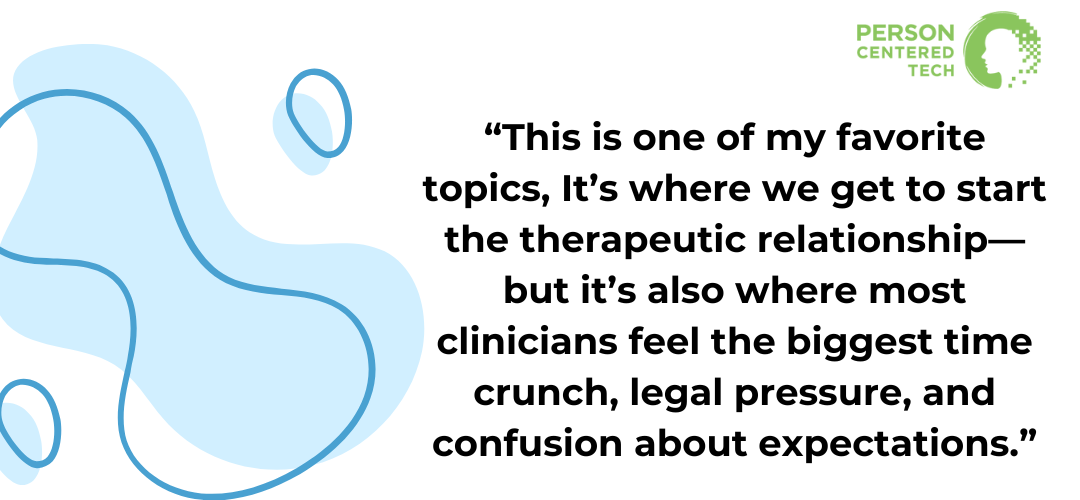
“This is one of my favorite topics,” she shared. “It’s where we get to start the therapeutic relationship—but it’s also where most clinicians feel the biggest time crunch, legal pressure, and confusion about expectations.”
Dr. McCaffrey’s teaching will help you untangle the chaos and replace it with structure, strategy, and ease, all while honoring the relational heart of the work.
Top Misconceptions About Intake & Assessment
- ❌ “There’s only one right way to document intake.”
Truth: There isn’t. Your approach should reflect your style, client needs, and workflow. - ❌ “You have to do it all within 45 minutes.”
Truth: Many clinicians extend intake across multiple sessions—learn how and when that’s appropriate. - ❌ “Forms can replace conversations.”
Truth: Forms are essential, but relational informed consent conversations are still key. - ❌ “You need to retype the same info into every form.”
Truth: Dr. McCaffrey’s rule: never write anything twice. Learn how to cross-reference instead.
Re-Centering Intake as a Relational Experience
One of the most resonant takeaways was this:
“Even if a client doesn’t continue in therapy with you, that first session should still feel like a positive experience.”
Minimizing screen time, communicating expectations, and helping the client feel seen and safe from the outset is essential.
Paperwork Pro Tips
- Have clients complete as much as possible before session.
- Explain the paperwork process up front to support completion.
- Break informed consent into distinct, digestible documents for more meaningful review.
What You’ll Learn
✅ Ethical and relational best practices for intake
✅ How to balance clinical and administrative demands
✅ Tips for documenting diagnosis under time pressure
✅ How to manage extended intakes across sessions
✅ Streamlined strategies to save time and reduce redundancy
Join Us Live on June 9th
This CE training will equip you with the clarity, confidence, and documentation tools you need to make intake a strength—not a stressor.
🗓 Live training date: June 9th
📹 Can’t attend live? Register to receive the replay and all materials.
Final Thoughts
When done well, intake documentation isn’t just a requirement—it’s a clinical asset. It sets the stage for trust, clarity, and effective care.
Let Dr. McCaffrey show you how to transform your approach so that documentation works with you, not against you.
✨ Don’t miss this valuable training. Reserve your spot today!