
1 CE credit hour on neurodiversity and the current social context
Creating a Neurodivergent-Affirming Private Practice
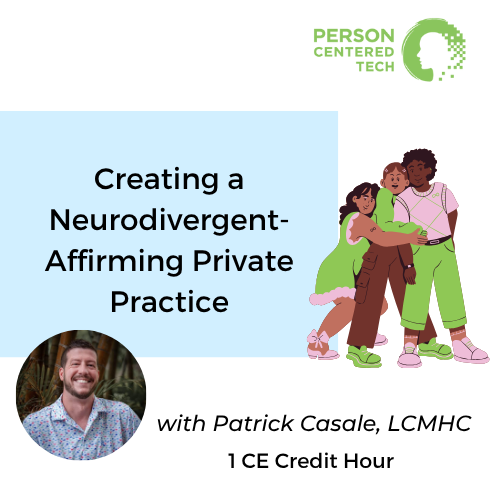
Presented by: Patrick Casale LCMHC NCC
1 CE credit hour
Have you been asked to rescind neurodivergent diagnoses, or wondered how to better market your practice to clients who are neurodivergent?
Do you have the knowledge and practical tools you need to build and run a truly neurodivergent-affirming private practice?
Join Patrick Casale LCMHC NCC, as he equips mental-health clinicians with the knowledge and practical tools to build and run a truly neurodivergent-affirming private practice.
On Demand Self Study
Experience the quality of the content of this training:
When to Diagnose Neurodivergent?
(and when to wait)
This 60-minute training equips mental-health clinicians with the knowledge and practical tools to build and run a truly neurodivergent-affirming private practice. Grounded in current research, lived experience, and ethical guidelines, the session defines a neurodiversity-affirming framework, contrasts it with deficit-based models, and outlines concrete steps for creating sensory-considerate spaces, adapting administrative workflows, and marketing inclusively. Legal and ethical considerations—including nondiscrimination mandates and informed-consent nuances—are woven throughout. Case examples illustrate common pitfalls (e.g., pathologizing language, masking expectations) and demonstrate how strengths-based interventions enhance therapeutic alliance and clinical outcomes for Autistic, ADHD, and otherwise neurodivergent clients.
YES!
We explicitly address the current contextual considerations for diagnosing neurodivergence as it relates to informed consent.
Real feedback from this event:
“Hands down, THE BEST training I have attended in a long time!!! This was so helpful. Please bring Patrick back again. What a gift to the profession!!!! We never got this training in school”

Practical Applications
Define the neurodiversity paradigm and at least two key differences between affirming and pathology-oriented practice models.

Inclusion without Exploitation
Describe two ethically sound marketing or outreach strategies that communicate inclusivity without exploiting neurodivergent identities.

Accessibility Strategies
Identify three office, documentation, or technological adaptations that increase accessibility for neurodivergent clients.
Who is this event for?
This course is designed for solo practitioners, and those in private practice. It is also suitable for practices that consist of 100% telehealth, or a mixture of in-person and telehealth treatment.
 In Person Practices
Hybrid Practices
Teletherapy Only Practices

Thank you for the information and for making it so accessible. Somehow you take the driest material and make it fun and immediately relevant. You folks knock it out of the park!
Course Details
1 CE Credit Hour. Self-Study, On-Demand, Recorded Video Seminar CE training.
Title: Creating a Neurodivergent-Affirming Private Practice
Authors/Presenters: Patrick Casale, LCMHC
CE Length: 1 CE credit hours
Legal-Ethical CE Hours: none
Educational objectives:
- Identify three office, documentation, or technological adaptations that increase accessibility for neurodivergent clients.
- Describe two ethically sound marketing or outreach strategies that communicate inclusivity without exploiting neurodivergent identities.
3. Define the neurodiversity paradigm and at least two key differences between affirming and pathology-oriented practice models.
Syllabus:
|
Time |
Topic & Method |
|
0:00 – 0:05 |
Welcome, presenter disclosure, polling of participant experience (Didactic + Poll) |
|
0:05 – 0:15 |
Neurodiversity paradigm vs. medical model; prevalence data & APA multicultural guidelines (Didactic) |
|
0:15 – 0:30 |
Building an affirming practice: sensory-friendly office design, flexible scheduling & paperwork, communication preferences (Case vignette + Discussion) |
|
0:30 – 0:45 |
Ethical & legal considerations: ADA, informed consent, non-maleficence, culturally responsive assessment (Mini-lecture + Interactive Qs) |
|
0:45 – 0:55 |
Inclusive marketing & community engagement: language guidelines, website accessibility, collaborative referral networks (Didactic + Chat brainstorm) |
|
0:55 – 1:00 |
Key take-aways, evaluation instructions, resource packet distribution (Wrap-up & Q &A) |
Meet Our Presenter
Presented by
Patrick Casale, LCMHC, NCC
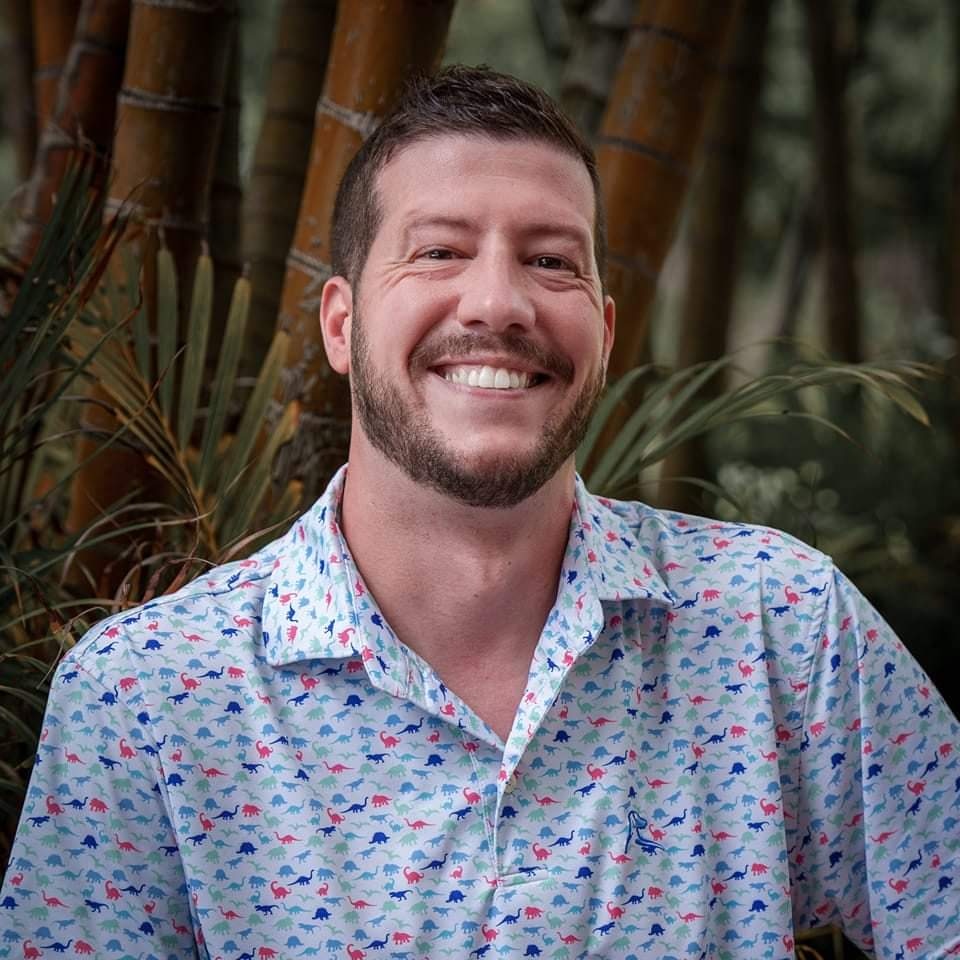
Patrick Casale, LCMHC, NCC (he/him) is an AuDHD group practice owner, private practice strategist, TEDx speaker, international retreat leader, and host of two top-ranked podcasts for neurodivergent clinicians. He founded Resilient Mind Counseling and All Things Private Practice to help mental health professionals build sustainable, values-driven, and inclusive businesses. Patrick blends clinical expertise with lived experience to teach neurodivergent-affirming leadership and business development strategies that challenge status quo models. He has presented across the U.S. and abroad on burnout prevention, ethical leadership, and inclusive practice design.
- Brown, H. M., & Woods, R. (2021). Neurodiversity-affirming practice in mental health: A clinician’s guide. Routledge.
- Kapp, S. K. (Ed.). (2020). Autistic community and the neurodiversity movement: Stories from the frontline. Palgrave Macmillan.
- Pellicano, E., den Houten, R., Stears, M., & den Haan, T. (2022). Towards a strengths-based clinical model for neurodevelopmental diversity. Journal of Autism and Developmental Disorders, 52(5), 2012-2024.
- Raymaker, D. M., & Nicolaidis, C. (2013). Participatory approaches to autism research. Autism, 17(3), 265-271.
- Singer, J. (1998). Odd people in: The birth of community amongst autistic people (Unpublished doctoral thesis). University of Technology, Sydney.
Resource List
- Divergent Conversations Podcast
Accuracy, Utility, and Risks Statement
Content is derived from peer-reviewed literature, APA multicultural guidelines, and the presenter’s 12 years of clinical practice with neurodivergent adults. Recommendations are intended as a foundation; clinicians must adapt techniques within the limits of their competence and local regulations. Potential risks include over-generalization of client needs, inadvertent reinforcement of masking, or misapplication of accommodations without collaborative client input. Strategies to mitigate these risks—ongoing consultation, client-centered feedback, and continued education—are explicitly discussed.
Conflicts of Interest
The presenter reports no relevant financial or non-financial conflicts of interest.
Commercial Support
None. This training received no financial or in-kind commercial support.