
Transcript
[Transcript] Episode 621: Beyond CBT, Documenting the Therapy You Actually Practice with Dr. Maelisa McCaffrey
Evan Dumas
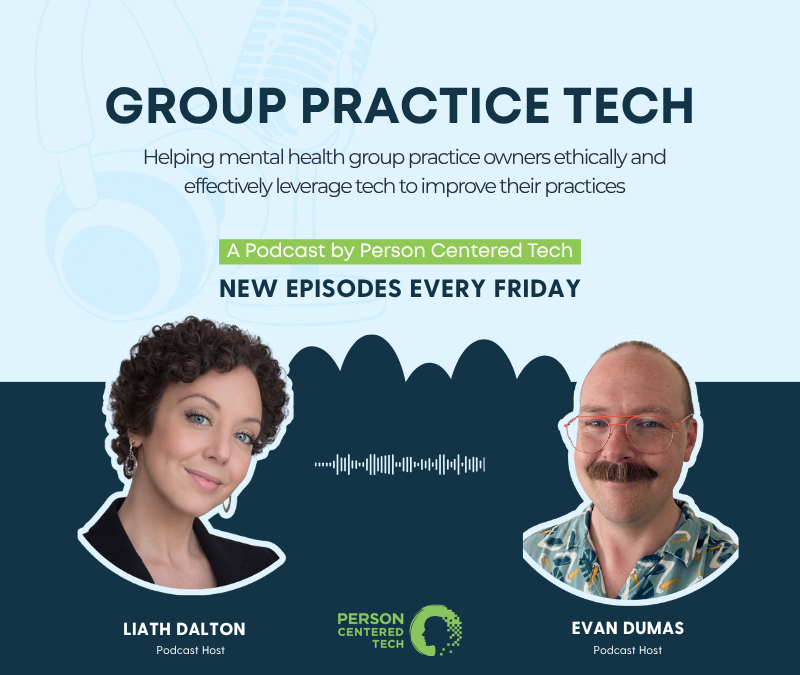
You’re listening to Group Practice Tech, a podcast by Person Centered Tech, where we help mental health group practice owners ethically and effectively leverage tech to improve their practices. I’m your co-host, Evan Dumas.
Liath Dalton
And I’m Liath Dalton, and we are Person Centered Tech.
Liath Dalton
This episode is brought to you by Therapy Notes. Therapy Notes is a robust online practice management and electronic health record system to support you in growing your thriving practice. Therapy Notes is a complete practice management system with all the functionality you need to manage client records, meet with clients remotely, create rich documentation, schedule appointments and bill insurance all right at your fingertips. To get two free months of Therapy Notes as a new Therapy Notes user go to therapynotes.com and use promo code PCT.
Liath Dalton
Hello, and welcome to Episode 621: Beyond CBT, Documenting the Therapy You Actually Practice with Dr. Maelisa McCaffrey.
Liath Dalton
Hi, Maelisa. Welcome.
Maelisa McCaffrey
Hello again. Thank you for having me back.
Liath Dalton
It is always a delight to have you here. And today we’re talking about something that I have been hearing therapists ask about increasingly of late, which is along the lines of, I’m doing really great work in session, but when I sit down to write the note, I don’t really know how to document it. So whether that’s somatic work, parts work, polyvagal informed interventions, mindfulness, creative therapies, or culturally informed approaches, we’re seeing a lot of clinicians feel like they have to translate everything into CBT language to satisfy, or here’s the like framing that we’re going to be talking about, and trying to dispel a bit, is that those interventions have to be situated in CBT language in order to satisfy documentation requirements for insurance reimbursement.
Liath Dalton
So this all has sort of precipitated the upcoming CE training that you’re going to be doing for the PCT community that I’m so excited about, that live training is going to be on july 27 and that also has a similar title to this podcast episode of Beyond CBT, Documenting Somatic, Creative, and Culturally-Informed Interventions.
Liath Dalton
But we thought it would be really good to just talk about the the why of this and and some of the challenges and misconceptions and and struggles that we’re wanting to equip clinicians to be able to to navigate and feel confident in their their clinical skills around this.
Liath Dalton
So what else do I need to say about you to introduce you properly before we dive into the topic? I think most of our listeners will have, have heard you before, and, and know of your work, but you are the founder of QA Prep and author of Documentation – I don’t have the book –
Maelisa McCaffrey
Stress-Free Documentation.
Liath Dalton
Yes, which is like the compendious resource for all things documentation for behavioral health providers, and you also have done many CE trainings for the PCT community, and are our go-to resource for all things documentation, as well as AI-assisted documentation. So that’s sort of the context for this conversation, right?
Liath Dalton
So let’s start with the problem, or the the challenge, as it were, which is that more and more therapists are asking this question than than we’ve previously seen. And so I want to hear what you’ve been then seeing, or what questions you’ve been getting in your consult and working groups.
Maelisa McCaffrey
Yeah. And so, honestly, I’ve always gotten this question. It’s not new. I think it’s probably been around for decades. It’s gotten a little more stressful for people recently because of the increased influence of insurance, and because of increased, like, awareness, and I think even just social media around audits, and hearing about all of this stuff. Like 25 years ago, it wasn’t as easy to hear that news as it is now, that, like, you know, a random group practice in your town had an audit and got clawbacks. So that type of information and fear has made those questions a little bit different, but, but really it’s been the same. So it’s, I’ve always gotten the question, like, “How do I document what I do? I know what I did in therapy, I know I’m doing really good work. My clients see change. I get referrals all the time from clients, from past clients, right? Like, I know I’m doing good work, but I can’t figure out how to translate that into a therapy session.”
Maelisa McCaffrey
So, number one, like, I want to normalize that, that is a very common experience to have. And a lot of that has to do with the fact that we don’t really get any training, most of us don’t get any training in documentation. Especially not in grad school, and then also we often don’t get that in our internships and in our first placements. And so there’s just so much going on there with why this happens. So the fact that you don’t know how to is kind of obvious, right? Like, why would you? Because no one has taught you. And then you start doing notes, and then if you had a really good supervisor, maybe they looked at your notes, maybe they didn’t. Maybe they gave you feedback, maybe they didn’t. Maybe the feedback they gave you was your notes are really bad, you need to do this, and didn’t really help teach you. Or maybe the feedback you got was your notes are really good, just keep doing what you’re doing.
Maelisa McCaffrey
That was the feedback I got, and I didn’t really know why my notes were good until I started getting trained as a quality assurance person working in agencies, and I was taught what to look for, and then I realized why my previous notes had been good, right? So I just want to normalize that experience. Like this is actually not a new problem, and I hope that’s encouraging for people, because it’s not that anything has changed dramatically in the last few years that is creating this issue. It’s always been there. So that’s kind of why.
Maelisa McCaffrey
I would say the other, like, one of the other big things that comes up, is that everyone thinks they can’t actually document what they’re doing, that they have to translate it into CBT language. And so not everyone, but a lot of clinicians come to me and they say, right, like I know I’m doing this great work, so there’s the whole “I know I’m doing great work, I don’t know how to write about it”, and then there’s, “I know I’m doing great work, and I bill to insurance, and I want my clients to be able to use their insurance for therapy, but I don’t do CBT, and so I have to translate it into CBT language.” And you know, those are really the two two of the most common questions I get overall, just about all of documentation.
Maelisa McCaffrey
And so the second one is kind of a myth, like you really don’t actually have to translate anything into CBT. You can actually simply document what you’re doing. And I know that sounds a lot more simple than it, than it actually is in practice, and that’s why I have endless resources on this, and why we’re doing this training, right?
Maelisa McCaffrey
So, but the reason why you don’t have to do CBT in practice is you simply have to show that your work, that your interventions have a result. That you have a reason for doing what you’re doing, and that there is a result from them. And no matter what type of modality you use, you had a reason for doing what you do.
Maelisa McCaffrey
Even if we think about, like, psychoanalysis, right, kind of the, the least CBT, one of the least CBT things we could think of, where you know you might simply offer a reflection, right? A simple statement is often the intervention that you’re doing as a psychoanalyst, as a psychoanalyst. You’re, you’re not like even really interpreting things a lot of the time. You might, but oftentimes you are simply reflecting. That is an intervention, right? And why were you doing that? You had a purpose behind it, even as, like, a psychoanalyst. You’re not just doing it for fun, you’re not doing it because you couldn’t think, every once in a while, you might do it because you couldn’t think of anything else to say. But, but most of the time, like, you have a purpose, right? You have an end game. Maybe you came in with different ideas about the session based on things that have happened before. Maybe you have a goal in mind that you’re trying to get this client to. And all of that has purpose behind it. And at least, I’m not trained in psychoanalysis, but people I know who are trained, like it’s very purposeful, right? And so there should be a lot of thought and intention behind it. And so that is, you know, that doesn’t mean that everything you do, right, will be what I call an active intervention, which we’ll get into in the training. So it doesn’t necessarily mean every single thing you do in session is like okay with insurance, right? Meaning that insurance is going to pay for it, but it doesn’t mean that they’re looking for CBT. They’re just looking for why you did what you did, and that it’s actually helping this person.
Liath Dalton
Right.
Maelisa McCaffrey
That’s the whole point. And in oftentimes the easiest way to explain that is to literally say what you did and not worry about translating it into some other language or figuring out how to do that.
Liath Dalton
Because I would think that a lot gets lost in that translation, that actually makes it less likely that the intentionality and the efficacy of that intervention is clear and therefore reimbursable, right? Like it has the that attempt at translation can have the opposite of the intended effect.
Maelisa McCaffrey
Right. And that also, like what you’re speaking to, also highlights the danger in only considering insurance when we look at documentation. Because that is one component, and if, especially if you’re contracted with insurance, yes, like you want your, your documentation to include all the components of medical necessity, and to support that, and we want to make that easy. A lot of my training is around that. And there are other reasons that we document, right?
Maelisa McCaffrey
Like if a client makes a complaint about you, a licensing board needs to be able to look at your documentation, and they’re going to look at your interventions in a very different way, right? They are looking to make sure, like what you said, like that, it actually makes sense, that it makes sense clinically, that it makes sense in response to certain experiences that the client is having, or to certain situations, that it makes sense overall, and that it tells a good story. All of those things are important to a licensing board.
Maelisa McCaffrey
I actually wrote a lot of my interventions to speak more to clients. So when I had a practice, I had an open notes rule before it was a thing. Before that was a phrase, right. And that was because I do have ADHD, I knew that I was at a really high risk of getting super behind in notes if I didn’t have a way to keep myself accountable. So my way of keeping myself accountable to notes, and that that is literally like the selfish reason that I, I did this, was to allow my clients to see their notes all the time. To always have access to their notes, and to then purposefully use my notes as a way to communicate with them.
Liath Dalton
Right.
Maelisa McCaffrey
And so you know, I would say, like, I will make sure to include that in your note later. Or if I offered a resource, I’ll put that in your note, you know, in this section. And so when I was writing my interventions, it was really more like a literal summary. I was just writing a summary of what happened. And I did it bullet point style, because I do everything bullet point style to make it easy. But, but I was really thinking about firstly, how is the client interpreting this, and does it make sense to them, and does it make sense so that we are literally on the same page with what’s happening in therapy.
Liath Dalton
I, I love that so much, and I think that framing sort of deactivates so much of what becomes really challenging for clinicians around documentation, right? Of thinking that documentation is just a bureaucratic process that’s required, that is separate from, like distinct from the actual clinical care and clinical relationship with the client.
Liath Dalton
And even from the HIPAA perspective we always talk about the clinical record as actually being part of client care and that that’s not just for insurance or reimbursement purposes but it is also to empower the client to, you know, have, have sort of choice and autonomy when it comes to their own health care, and be an active participant in it. And that when they work with other providers, having that accurate documentation record is something that can improve their quality of care and therefore outcomes across their healthcare experience, right?
Maelisa McCaffrey
And it’s, it’s really common. It’s, I don’t want to say it’s really common. Obviously, people who are working with me are struggling with documentation in some way, right? But I will say it is not uncommon for me to work with someone or talk with someone where they say, you know, notes have been really stressful for them, and they’ve heard all these things about, like, you know, keep things as vague as possible, don’t include details so that it doesn’t harm your client, and then they’ve also heard, write everything, because if it’s not written down, it didn’t happen, and they’re trying to balance those two things. You can imagine usually the answer is somewhere in the middle, which can be hard to find.
Maelisa McCaffrey
But when you try to only pick one of those realms, right, like only write to insurance or only write things super vaguely, so that nobody ever gets information from this progress note. You’re always going to create some potential harm. And one thing that ends up being a common experience is if a client at some point wants to apply for disability, and they will request their psychotherapy notes, and I’ve worked with people where they said I purposefully did not write certain things that actually happened, and then their notes could not support, according to, like, this disability application could not support the application. And thankfully, a lot of times there are other physicians or psychiatrists or something, and people can still get disability, but I think that’s one thing where, when we really focus on, like, I don’t want to document this way, or I do because of some ideology that we might have, and we get stuck in that, it can create potential harm.
Maelisa McCaffrey
And so really thinking through, like, just what actually happened, right? And if you have certain sensitive scenarios, I think we have a different training on that.
Liath Dalton
We do.
Maelisa McCaffrey
You know, because there are times where you want to wordsmith a little bit. But for the most part, most of the time you really are just documenting what happened. And a lot of my training centers around how to do that quickly, easily, stress free, and often doing that documenting in that way also means you are keeping things a little bit more vague because you’re not going into like tons and tons of detail, and so you are protecting potentially sensitive information as well. But really like not getting caught in I always have to do things this way or the or the other way. Really just thinking, like, actually, let me step back, like you said, like, take a breath, step back, like, what happened? Let me just write that.
Liath Dalton
Right. And I see just this intense undercurrent of anxiety and stress around documentation, especially related to this misconception that all of the clinical work that they’re doing has to be translated into CBT language. And that I think part of that then leads to a feeling of like somehow their work that is not CBT, that is these other interventions, is somehow less than, or like they’re cheating to an extent by doing this, this work that the presumption is insurance won’t see as legitimate, right? And then it has to be documented in such a way to make insurance see it as legitimate, but there I think it’s a fairly pervasive sense that if you just document the work that you’re doing, it’s not going to be seen as legitimate. And so I think that just creates such a dis-ease for clinicians that isn’t necessary, that’s totally counterproductive to their own own well-being and ability to be fully present to the to the clinical work that they are doing that is effective for for their clients.
Maelisa McCaffrey
And here’s where I think it’s really important to acknowledge that the clinical work you do, no matter what you do, right, so like for this training we’re going to talk about like animal-assisted therapy, and do you incorporate astrology? Do you incorporate like ancestral healing, right, like all of these things that are non-traditional, not, definitely not CBT, right? We can say that. And so, and very transformational. There’s a reason that people use these other practices as a part of therapy. There’s a reason people incorporate movement and breathwork and mindfulness and all these things in therapy, because it is transformational, it is extremely supportive of the experience, and your progress notes are never going to capture the depth of that transformation. That is not their job. And I think a lot of times that dis-ease that you spoke to is that disconnect, where the note, like, especially if you are using a lot of strategies that I teach, and kind of using check boxes and making things easy for yourself, it’s not going to be a poem, right? It’s not going to read like a poem, and the experience of therapy is much more like poetry. But you’re never, you’re not going to have that in your progress notes. Like that’s not their purpose.
Maelisa McCaffrey
Some people can do it, I’ve seen it, right, but that’s those are rare people who are just really good writers, and you know, and even that may not always be appropriate, right? So it’s, beautiful, and it’s beautiful. Like, as a quality assurance person, I loved reading charts. I didn’t love auditing charts. I loved reading people’s stories. Like, reading the story of people in therapy is very powerful and meaningful. And so your notes can capture that over time, but they’re never going to, especially in the moment when you’re writing one specific progress note about a specific section session, it’s just never going to capture that depth, and so acknowledging that there’s a gap there, and that might be part of why you feel that discomfort, because it’s not capturing what really happened. We’re just capturing like the observable part of what happened. But so much of it is this really felt sense and experience that that you’re not going to write to. And that’s okay.
Liath Dalton
So that’s really beautifully put, because I think there certainly is a component that is the like the ineffable that is occurring on the felt sense and experiential level. Like embodied phenomenology. We’re, we could like totally geek out on on so many different pieces, but I feel like that hopefully just hearing the way that you framed and named that will bring some settling in the body of, oh yeah, that is accessible, I can document in that way, it is, it is okay, and that is is workable for for my practice and my clients. That is what I hope folks will be taking away from from this training.
Liath Dalton
Which kind of leads me to another component of the consideration. Which is that there have been some sort of contextual shifts, it feels like, in in the last few years that has made documentation feel harder for clinicians. And there’s a little bit of an elephant in the room for that, but I’m gonna let you speak, speak to that. So, so what, what do you think those, those specific shifts are that are making the experience of documentation feel harder for so many clinicians?
Maelisa McCaffrey
Yeah, so I think overall it actually isn’t that different, I do believe that, because I’ve gotten all the same questions since 2014 and, and before that, when I was a QA person at an agency, right? Like, literally, the questions are still the same, the over the overall like content that I teach really has not changed, it’s very, very similar.
Maelisa McCaffrey
The, the elephant in the room is AI. Because that has more than anything, more than EHRs coming on the scene, like more than anything, has changed the way that that people, I mean, are doing so many things, but the way that clinicians are documenting. And the experience a lot of clinicians have when they first use AI, especially if you do something like use the AI listens in on a recording, or listens in on your session, like a telehealth session, and so you don’t give it any information, and then it produces a progress note or a summary of your session. And it will use all kinds of clinical language that sounds impressive, and so many people will have the experience of reading that the first time, and then saying, “Oh my gosh, is this what I did? I could never write a note that good.” Or, “I could never write a note like that.”
Maelisa McCaffrey
And I’ve heard that, and I know you’ve heard that from so many clinicians. And unfortunately, I think that, it perpetuates this myth, because what is AI typically doing? It’s typically writing in that CBT language. So it kind of perpetuates this myth that things have to be CBT, and you know, written in such a way. And it also perpetuates the myth that, like, more complicated, more complex, more jargon is better. And it’s not. It’s more important that someone, a person, not even necessarily another clinician, can read your note and understand what happened. That’s the most important part. And so we can create all kinds of fake flowery language, and AI is really good at doing that. And AI is really good at making things way longer than it needs to be.
Liath Dalton
Yes.
Maelisa McCaffrey
That’s like one of the things it’s best at. So AI can do that. It doesn’t actually mean it’s better than your very simple basic note. It is kind of cool to read that AI-generated note, and think, oh my gosh, like, I, wow, like, I look at all these things I did, right?
Liath Dalton
Right.
Maelisa McCaffrey
Like I was on fire, and like AI actually knows how to write it that way. So I do get that, you know, want to validate that experience. And again, like I have had this experience of reading through entire client files, reading through, not even at agencies, right? Like doing these reviews with people who book consults with me, and reading through their notes. That, what’s happening in session comes through so much more than you think. Even when you’re not using all of that fancy flowery jargon. It really does over time. And it’s very difficult to to see when you’re just in the moment, writing a session for this week’s, writing a note for this week’s session. It’s really much easier to see in retrospect when you’re looking at a full file, and in multiple weeks, like looking at a story in that way.
Maelisa McCaffrey
But I had this experience just a few weeks ago, we did a notes review in one of the programs that I run, and with someone you know, they had their note, they used my template, it felt, you know, very checkbox-like, and yet, based on the few client quotes they put in there and a few extra words they added, I was able to pick up on a lot of themes, and ask them, and they were like, yeah, that’s exactly what’s been happening. And that’s, you know, so much does come through. And the important parts then come through. Not like the gory details about the sexual abuse they experienced, as an example, right. Like the more important element of that change and that progression actually do come through. So, so you don’t need AI to write a super complex note for you.
Liath Dalton
I mean,
Maelisa McCaffrey
And it doesn’t mean it’s better.
Liath Dalton
That’s the thing, like part of the primary purposes or functions of LLMs is to produce really polished, fluent sounding writing, but that fluency, or seeming fluency, and polish can really still have these massive gaps, right? Where, where what it’s saying sounds good on the surface, but isn’t really substantive.
Maelisa McCaffrey
Yeah, and especially for insurance, if you are worried about insurance, it doesn’t always consider medical necessity either, so it might have all kinds of great language and intervention speak, but not actually be using things that insurance does want to see. So I’ve seen that a lot, actually, and purposefully, when I am testing AI platforms, I use a session with Carl Rogers on purpose, so that it’s very humanistic, it’s all of him, you know, asking questions as the interventions, right? Like that’s what he does the almost the whole time in the session, and I think you can absolutely pull out so many interventions from that session that would fly with insurance, and AI doesn’t always do it when I use that session as the example for it to write the note.
Liath Dalton
Yeah, and you’ve done that test multiple times with multiple different AI platforms. And we’re not talking platforms the like consumer level Chat GPT and Claude, we’re talking about AI programs designed specifically for behavioral health clinical documentation, right?
Liath Dalton
Which, so that kind of brings me to when we first announced your upcoming training. One of the email responses that we got was something along the lines of, hey, AI is a really good helper for that, for you know, documenting medical necessity for the interventions that folks are actually doing. And was like, yeah, AI can be a great assistant, but have have a very sort of strong position on what the sort of fundamentals are that need to be in place in order for AI to be a useful assistant in that context, and so we’d love to hear sort of your, your response and what that brings up for for you.
Maelisa McCaffrey
Yeah, I mean, I agree. Like I use AI to help with some of these trainings now, and to get ideas. And I have to edit a lot. And this is with, so I’ll give you two kind of examples.
Maelisa McCaffrey
There’s the example of me testing these progress notes in these platforms. And there’s the example of me just using AI on a general basis.
Maelisa McCaffrey
I have spent probably 20 hours so far, at least, really trying to make Claude sound like me and teaching it how to sound like me. Like literally hours upon hours on these projects, and creating resources for Claude. Here’s how my voice sounds. Here’s what I need. Here’s my client, like going into way more depth than I have ever in any business course, in any other thing before. Like, really analyzing what is valuable to me as a person, as a company, all these things. And still, like it will miss the most basic things every once in a while. Even after all this time I’ve spent and all of these resources I’ve been putting into it. It’s just not perfect, it’s just not there yet. And I do think it will get better in the future, and it’s still never going to know what I need until I teach it, right? It’s not going to know how to sound like me until it learns about that. And it does, although there’s some aspects of AI that can sound, can seem scary, how quickly it can emulate things, not consistently right. If you’ve used AI, you know this, right?
Maelisa McCaffrey
So, what I’ve seen with these progress note generators, the last time, it’s been a few months since I really dug in and went into a hole. Thankfully, I don’t associate with any specific progress note generator AI company. Most of them have given me a free account, so I can play around with their systems, which is really great. So I went into a bunch of them, and, and did this, you know, a few months ago. And I had done this years ago as well. Gave it that same session again, saw, like, how has it gotten better at writing the notes? What kind of notes is it writing? And also spend a lot more time teaching it what I wanted. So if I could, if the system allowed me to, I would create my template, like my QA Prep template that I, that I teach on. Because I really wanted to see if, if I could do that, how long it would take, and then you know, how good would it be at emulating the template?
Maelisa McCaffrey
Unfortunately, the one I would say is probably the best system that I used, it took the longest to teach. It took, I think, I spent like eight hours sitting at this computer in this very seat for that one program. Like for that one system. And it was really good at the end, but if you think about when you signed up for your EHR, and all the time and effort it took, potentially months of, you know, of setting up all those systems, creating all those forms, creating all the templates, setting up settings, all of that. That is the level of time and effort you need to invest to get the similar output from these AI programs. So you can get it, but don’t trust that one-off first impression. Where you’re like, oh my gosh, this is what I did? You will need to edit these things. You will need to change things, and it takes a lot of time and effort to teach it.
Maelisa McCaffrey
It is possible, I think it’s worth it for a lot of people. If you really struggle with getting notes done, especially if you, if you have dyslexia, if you have another learning disability, if English is your second language, like, these are all a lot of things that, I can teach you a lot of strategies, but writing might always be more difficult for you than for other people, right?
Maelisa McCaffrey
And if you have a chronic health condition and just can’t sit for as long, you know, there’s so many things that can impact the reality of being at the computer and writing notes. And so I do think that AI can be really, really helpful for a lot of those things. But it is not like a plug and play, I can just pay for this system, log in, and trust this one initial note that looks really good. It will take you time and effort to get it to be close to being as good as you can be. And you will always have to check it.
Liath Dalton
So it is not in any way, in other words, a replacement, and it is only a good assistant, provided you have the clinical skills and the documentation skills and confidence in those to train and direct AI to assist you correctly, right? And and and that’s where I feel like a great deal of concern over the kind of imposter syndrome activation that the first glance assumed quality of AI-generated notes for any type of clinical work or clinical interventions is is generating. And so that’s not, like you’re saying, to say that you shouldn’t utilize AI, but you still need to feel confident in your own skills for what you’re using it to assist you with in order to use it effectively.
Liath Dalton
And then I also think that just is going to translate to a much better emotional experience for the clinician too, that you’re, you’re not then outsourcing this important part of client care and clinical work to another tool, where you kind of like abdicate your own, your own role and agency in it. You’re like, I have these skills, I can leverage this tool to be more efficient and address some of the friction points that I feel with documentation. But it’s not replacing what the, what the therapist is, is doing.
Maelisa McCaffrey
Yeah. And it’s really important to remember that, while a lot of clients are okay with you using AI, you do need client consent, and not all of your clients are going to consent to that. So, some people I work with have said, like, all of my clients are fine with it, and so they can literally use it for all their clients. That’s not typically the case. So, you’re still like, you still need to have the skill to be able to do it for those clients who are not okay with AI being a part of their record keeping.
Liath Dalton
Yes, exactly. Which kind of like prompted me for, for two different questions as well. Of like what mistakes have you seen AI-generated documentation make? And this really seems to be the takeaway of the whole conversation as it pertains to AI, that that would it be fair to say that you think understanding good documentation first actually makes AI more useful?
Maelisa McCaffrey
Yes, 100% to your second question. And any of us who know anything well, we get that, right? Like, if you know something well, you can browse it more easily, you can quickly pick up on things that are, that work, that are relevant, that aren’t, etc. So the better you are at documentation, the better you’ll be at reviewing documentation. And if you ever want to be a supervisor, again, another good skill skill you’re going to need to have.
Maelisa McCaffrey
So related, mistakes that I have seen AI make are things like over focusing on one component of the session. So, to the point of, I had somebody I was working with, and they said that the client talked about, like, at the beginning, you know, logged into a session and just said something like, “Oh, sorry, I was late, I had to go to the bathroom.” And, and that was it. The the therapist I was working with, she said, like, literally, she’s like, “I think I said, maybe, like, oh no problem, I know how that is, right?” She’s like, that was it. We had the whole session, and then the AI, like, hyper-focused on that one component, and said the whole session was about toileting, with this, you know, like grown adult who was like talking about anxiety.
Liath Dalton
Wow.
Maelisa McCaffrey
And so it’s stuff like this that sounds crazy, and the thing is, I almost wouldn’t believe it if I hadn’t seen it myself. It will do things like that after you’ve gotten to a point where you think it’s really good. Like you might have had two months of great notes from this AI, and then it does something silly like that. And so it’s really, really important.
Maelisa McCaffrey
The other thing is, sometimes I said I use this Carl Rogers session to test these systems. Sometimes it does a really great job of simply explaining what Carl Rogers did. And that means it doesn’t include the medical necessity type wording that I think you can ascertain from the session, but that is not as literal. So it’s, it wasn’t that the AI necessarily did a poor job of reflecting the session, but it did a poor job of reflecting medical necessity in the session, right? So that’s another example.
Maelisa McCaffrey
Another example from the Carl Rogers session is that there was one AI, I forget exactly the quote that Carl Rogers says, but what he does is he repeats what the woman who is the client says about herself. And it’s a like a negative self statement. And so he repeats it to her, and in the, I never even paid attention to this part of the session, and I’ve seen this session dozens and dozens of times, because this is what I do, and I use it for training a lot. I never even paid attention to that until this one AI platform gave me a progress note, where it, it’s, it said that he called her that name, right? Like the way it phrased it, because all the, all the AI knows is that Carl Rogers said this about her, right, said this negative thing about this client. And I was like, oh my gosh, like it makes it sound so bad. But in the context of the session, it’s such a natural flow, you don’t even notice it, right? You don’t even think about that.
Maelisa McCaffrey
And so it, these are just good examples of how, like with human interaction, there is nuance. And sometimes AI can pick up on it, and sometimes it can’t. And you really can’t rely on AI picking up nuance, I think, is the biggest takeaway. You can rely on it giving you a super long summary of what happened. That’s also another problem that I see. Because if you are struggling with getting notes done, you don’t want a really long summary, you don’t want to have to read through paragraphs and paragraphs of text. And a lot of AI will give you that, and frankly, a lot of my training around AI is teaching it to be more brief. And even that it can get off track, and you have to remind it to be more brief. I literally did that this morning. So that’s a rule that I’ve created in my AI. So you know, it just defaults to that.
Liath Dalton
Yeah.
Maelisa McCaffrey
So it’s a lot of, kind of, like working with, kind of, think of like teaching a kid something, where you have to kind of retrain it and remind it. And sometimes it doesn’t pick up on the nuance, and you have to explain that, or just fix it yourself. So you know that’s that’s the reality of it. It can be useful, but you have to remember, you can never rely on it fully, because sometimes when you least expect it, it will make a really glaring error.
Liath Dalton
indeed. Well, this is why the skill building and being really fluent and confident in these, these skills before utilizing AI is important in being able to use AI effectively, and also just for the, I think, emotional experience of using AI too. That you’re not using it because it’s better than you. Or able to do something that you, as a clinician are not.
Liath Dalton
So one one thing I’m really, really excited about in this workshop is that you’re going to be incorporating live coaching, like, demo examples of this. All in service of skill building and confidence building. So I wanted to hear, or have have our listeners get to hear why you wanted to teach this through incorporating coaching instead of just sort of the usual CE presentation format of examples on on slides.
Maelisa McCaffrey
Yeah. So quite a few reasons. And Liath and I had so much fun, kind of like going back and forth setting up this presentation. Because when you asked me about it, like, oh yeah, we could do this. And then I immediately thought, you know, when I do consultations with clients, that’s a lot of what it is, is then to, I’ll say, well, just tell me about, you know, a session that happened today. And they’ll tell me about it, and then I’ll start writing down things that they’re saying and interventions that they did. And so I am literally just writing down what they tell what they’re telling me. Sometimes I’m wordsmithing it a little bit and using maybe like buzzwords that I know are kind of like okay with insurance, or you know commonly used interventions. And I do understand that there is some translation that has to happen when you’re doing that, a lot of the time. I also know that’s something you can learn to do, like I wasn’t born doing that. I learned these interventions words, right? And and then kind of like kept adding and tweaking them. And so I’m really excited because that’s where I can create a list, and as part of the training, we are going to have a list of interventions. I’m going to have a framework for how to also create your own interventions, but I can never create. I love creating resources, but I can never capture every possible scenario.
Maelisa McCaffrey
And with all of these types of interventions, there’s so many things that, like, I’m not trained in. And so I don’t know all of the phrases. For example, IFS. I love IFS. I’m not trained in IFS, and so I know a lot of the terms, but I don’t know all of them, and I don’t think about them the same way someone who’s trained in IFS does. So when I talk to those people and do consults, it’s so easy for me to then like plug that language into an intervention, but I need them giving me that information. So to me it makes the whole workshop, like the whole training, so much more rich when we can have a few examples of that in real time. And you know, ideally use some, like maybe IFS or like attachment stuff, you know, like things that you are talking about with clients and using actively on a weekly basis, and feel like I still don’t know how to write this for insurance or how to translate, you know, attachment theory into practical interventions that are observable. I guarantee that we can do it. Like I am confident in being able to do this. Because it doesn’t have to be as complex as we think. Especially when we do let, let the pressure of it capturing the depth of the session go.
Liath Dalton
Mmm.
Maelisa McCaffrey
Then we can just kind of plug and play some of these, these phrases in. But I’m really excited. Because, yeah, I just can’t think of all the things, and so I want to see what people bring up, and I, you know, want it to be really interactive. And my goal with it, with the training is that at the end of the training you have a list. So maybe you’re not an IFS therapist, but we’re going to have so many different things that we’ll go through, so that and have time for you to create more personalized lists and get feedback on these interventions as you’re writing them. Even if you’re not like in one of the coaching sessions.
Maelisa McCaffrey
So that’s that’s the way to really handle this, is like getting actual feedback on it, and seeing these ideas in real time. So, I think it’s the best way to learn, and it’s the best way for you to get like the most comprehensive interventions list or framework that you can get.
Liath Dalton
Right, it’s the connecting it to the actual practical application, taking it out of the just theoretical or the examples, right, and actually working with it, which then creates ownership of it, which is what we ultimately want folks to have. So I am so excited for folks to, you know, have this, this resource and support, and just appreciate you for, for all that, all that you are, and all that you do in, in this professional space.
Liath Dalton
So everybody, if you’re, you’re not already highly intrigued by this, you can see more details about the, the training and the application as well, to be one of the coaching demo volunteers in the link that will be in the show notes, and then, of course, I will also be including a link to Maelisa’s website, QA Prep, and her fabulous book on Stress-Free Documentation. So do check out those resources. And we hope you’ll be joining us for the live training. If this is something, this conversation, and then the challenges and solutions that we’ve been talking about are resonant with you, and as always, this will also be available as an on-demand self-study after the fact, though I feel like this one in particular is a really great one to attend live, if possible.
Liath Dalton
So take good care, everybody. Thanks for joining us. And thank you immensely, Maelisa.
Maelisa McCaffrey
Thank you.
Liath Dalton
This has been Group Practice Tech. You can find us at personcenteredtech.com. For more podcast episodes, you can go to personcenteredtech.com/podcast or click podcast on the menu bar.


Your Hosts:
PCT’s Director Liath Dalton
PCT CE Presenter & Documentation Expert: Dr. Maelisa McCaffrey
Welcome solo and group practice owners! We are Liath Dalton and special guest Dr. Maelisa McCaffrey, your co-hosts for this episode of Group Practice Tech.
In our latest episode, Liath chats with Dr. Maelisa McCaffrey about how to properly document your therapy sessions.
We discuss:
- Normalizing why documentation is such a struggle for clinicians
- Dispelling the myth that it is necessary to translate what you’re doing into CBT language for insurance reimbursement and why
- The danger of only considering insurance when documenting
- Documenting what actually happened in session
- Acknowledging that progress notes are never going to fully capture the depth of therapeutic transformation
- AI documentation: is it better?
- What fundamentals need to be in place for AI to be clinically useful
- Mistakes Maelisa has seen AI make in clinical documentation
- Maelisa’s upcoming CE training on documentation, featuring live coaching demos to help with skill-building
PCT Resources:
- New CE Training: Beyond CBT: Documenting Somatic, Creative, and Culturally-Informed Interventions Presented by Dr. Maelisa McCaffrey | 3 CE Credit Hours | Live (7/hours 27) and On-Demand
- This workshop is designed for therapists who want their documentation to reflect the work they’re actually doing. Participants will learn a practical framework for connecting contemporary therapeutic interventions to medical necessity, develop personalized intervention language for treatment plans and progress notes, and watch live documentation coaching sessions that demonstrate the documentation process in real time. Includes downloadable worksheets, intervention templates, and on-demand self-study CE course access following the live event.
- Explore Dr. McCaffrey’s PCT CE course collection on Documentation & Clinical Use of AI
- Dr. Maelisa McCaffrey is one of the leading educators on ethical, clinically meaningful documentation for mental health professionals. Explore her complete collection of PCT continuing education courses on progress notes, treatment plans, medical necessity, insurance audits, contemporary documentation practices, and the ethical use of AI in clinical work.
Resources:
- Dr. McCaffrey’s book: Stress Free Documentation for Mental Health Therapists
- Dr. McCaffrey’s company: QA Prep
- Want to continue learning from Dr. Maelisa McCaffrey? Visit QA Prep, her educational platform dedicated to helping mental health professionals create documentation that is clinically meaningful, ethical, efficient, and far less stressful. Explore free resources, self-paced courses, consultation, practical tools, and her Stress-Free Documentation book covering progress notes, treatment planning, medical necessity, AI, supervision, and more.

Therapy Notes proudly sponsors Group Practice Tech!
TherapyNotes is a behavioral health EMR/EHR that helps you securely manage records, book appointments, write notes, bill, and more. We recommend it for use by mental health professionals. Learn more about TherapyNotes and use code “PCT” to get two months of free software.
*Please note that this offer only applies to brand-new TherapyNotes customers
Resources for Listeners
Resources:
PCT Resources:
- HIPAA Risk Analysis & Risk Mitigation Planning service for mental health practices — care for your practice using our supportive, shame-free risk analysis and mitigation planning service. You’ll have your Risk Analysis done within 2 hours, performed by a PCT consultant, using a tool built specifically for mental health practice, and a mitigation checklist to help you reduce your risks.
- PCT’s Comprehensive HIPAA Security Compliance Program (discounted) bundles:
-
- For Group Practices
- For Solo Practitioners
- Comprehensive HIPAA Security Policies & Procedures
- Forms & Logs for documenting implementation and maintenance of Policies & Procedures in practice
- Device & Workspace Security Suites
- Direct Support & Consultation from PCT team + therapist attorney Eric Ström, JD PhD LMHC (live & recorded + searchable library)
- Includes the Risk Analysis & Risk Mitigation Planning service + tool
- HIPAA Security & Privacy Ethics training
-
- Group Practice Care Premium
- weekly (live & recorded) direct support & consultation service, Group Practice Office Hours — including monthly session with therapist attorney Eric Ström, JD PhD LMHC
- Device Security Suite: assignable staff HIPAA Security Awareness: Bring Your Own Device training + access to Device Security Center with step-by-step device-specific tutorials & registration forms for securing and documenting all personally owned & practice-provided devices (for *all* team members at no per-person cost)
- Remote Workspace Security Suite: assignable staff HIPAA Security Awareness: Remote Workspaces training for all team members + access to Remote Workspace Center with step-by-step tutorials & registration forms for securing and documenting Remote Workspaces (for *all* team members at no per-person cost) + more
Group Practices
Get more information about how PCT can help you reach HIPAA compliance while optimizing and streamlining your practice.
Solo Practitioners
Get more information about how PCT can help you reach HIPAA compliance while optimizing and streamlining your practice.